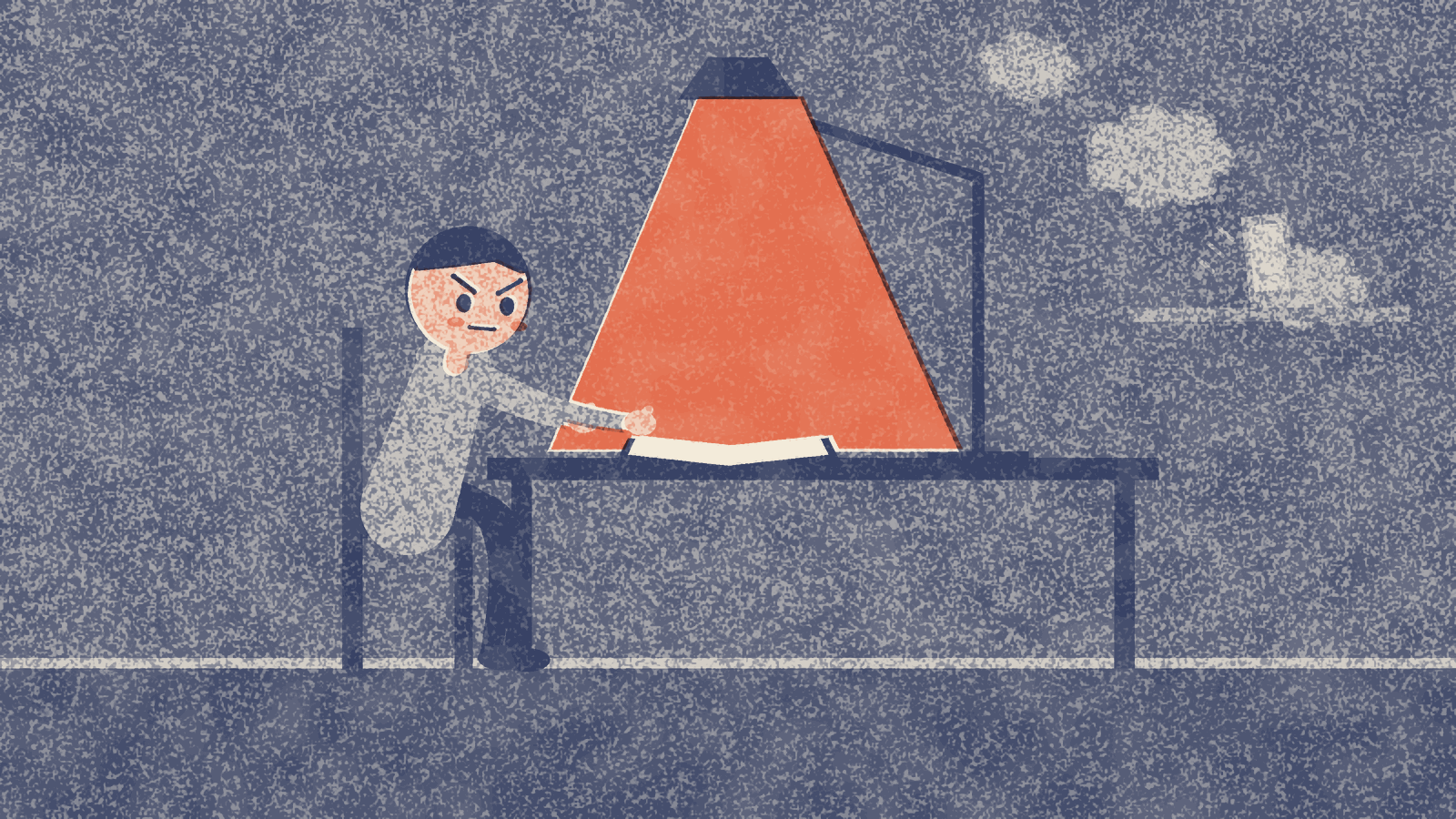
You sit down to read one chapter. Four minutes in, you have checked a message, reread the same paragraph twice and wondered what is for dinner. The chapter is still there, patient and unread, and your attention has gone wandering again.
Learning how to focus starts with a more accurate picture of what attention does when it leaves. Researchers have studied the leftover thoughts that follow a task switch, the quiet pull of a phone on the desk, and the short stretches a group of office workers spent on any one screen. Those findings point to a handful of practices worth trying.
Key Takeaways
- In two experiments, Leroy (2009) found that people need to stop thinking about one task to fully transition their attention to another, that this is difficult when the first task is unfinished, and that performance on the next task suffers.
- Ward et al. (2017) reported across two experiments that the mere presence of one’s own smartphone reduced available cognitive capacity, and that the cost was highest for people highest in smartphone dependence.
- A 2022 replication attempt of Ward et al.’s second experiment found no differences between phone locations, as Skowronek et al. (2023) describe, so the phone effect is still under debate.
- In a workplace study of 40 volunteers, Mark et al. (2016) measured a median of 40.2 seconds of screen focus before a switch.
- The Pomodoro Technique is a practice that Francesco Cirillo began developing in the 1980s, and its own site describes it as a way to plan, focus and reflect.
Why focus slips when you switch tasks
Sophie Leroy gave the leftover pull of an earlier task a name: attention residue. Her description is simple. Part of your attention stays with the prior task after you have started the next one.
In her 2009 paper, two experiments tested what happens when people switch from one task to another. The abstract reports that people need to stop thinking about one task in order to fully transition their attention and perform well on another. It also reports that people find it difficult to move their attention away from an unfinished task, and that their subsequent task performance suffers.
The abstract adds one more finding. Time pressure while finishing a prior task helped people disengage from it and contributed to higher performance on the next task.
Think about what that means for an ordinary study session. You are halfway through an email when you open your notes, and the half-written email goes with you. The email occupies a corner of your mind while your eyes move across the page.
How to focus on studying when your mind keeps returning to something else
Studying is a stack of small switches: from phone to desk, from lecture to notes, from one chapter to the next. Each switch is a place where residue can collect.
Leroy’s experiments were about work tasks, and they point to a few moves that a student can try. These are practices drawn from the idea, and the paper itself did not test them on study habits:
- Finish or park the small task before you open the book. A quick reply sent or a note written down is a reasonable try, though Leroy’s abstract reports that finishing one task before switching was insufficient by itself for an effective transition.
- Write down where you stopped. A line such as “next step: draft the second paragraph” gives the unfinished task a place to wait.
- Give the next block a short, defined window. A little time pressure helped the people in Leroy’s experiments disengage from the task they had just finished.
- Keep one task open at a time, as an experiment to try on yourself and judge by how the session feels.
If the same thought keeps returning mid-session, it may carry feeling as well as content. Procrastination and emotions look at how a delay often follows a feeling, and that can explain why one particular task is the one your mind keeps leaving.
What a phone on the desk may be doing
Ward, Duke, Gneezy and Bos tested what they called the brain drain hypothesis: that the mere presence of one’s own smartphone occupies limited cognitive resources and leaves fewer for other tasks. Across two experiments, they report that the mere presence of these devices reduces available cognitive capacity, even when people successfully resist checking their phones. They also report that the costs were highest for those highest in smartphone dependence.
A later study by Skowronek, Seifert and Lindberg reported a related result. Participants aged 20 to 34 performed a concentration and attention test with and without a smartphone present, and the authors report that the mere presence of a smartphone resulted in lower cognitive performance.
The picture has another side. Skowronek and colleagues describe a replication by Ruiz Pardo and Minda (2022) that used the same tasks and conditions as Ward et al.’s second experiment. According to their account, the replication found no differences between the phone locations (on the desk, in a pocket or bag, outside the testing room) on either task, and its authors concluded that the presence of one’s phone may not be enough to affect cognitive performance.
So the evidence for a phone effect is mixed. A practical reading is that moving your phone out of sight costs you very little and might help a little. It is a low-cost experiment you can run on yourself for a week and judge by how your sessions feel.
How long can you expect to hold one thing
A realistic picture of attention helps with expectations. In an in situ study of 40 volunteers in a workplace, Mark and colleagues (2016) reported a median screen focus of 40.2 seconds and a mean of 47.0 seconds.
That figure describes screen switching among workers during their day, and it is one of several measures covered in how long the average attention span lasts, where each study’s definition is laid out side by side. It gives you one reference point for how often those workers switched screens, and your own sessions may look different.
A wandering mind is an ordinary part of a long session, so you can plan for it. Each time your attention wanders and returns, the return counts as the skill itself.
How to focus better with a timed practice
The Pomodoro Technique is a practice, and it deserves to be described as one. Francesco Cirillo began developing it in the 1980s, while he was a university student, by challenging himself to focus for a short period using a tomato-shaped kitchen timer, according to the technique’s own site. That site describes a method built around three steps:
- Plan: choose your work and estimate effort realistically.
- Focus: work on one activity at a time, handle interruptions and use regular breaks to protect your focus.
- Reflect: record your effort, compare estimates with reality and make small improvements.
The site presents this as a way to understand how you work and make realistic choices. None of the sources behind this article tested it in a controlled study, so it stands here as a structure you can adjust to fit your own days.
Notice how it lines up with the research above. A timer gives a task a defined window, a single activity in focus fits the one-task practice, and a break gives the previous block a clear stopping point. These parallels are the article’s own inference.
Starting small when starting is the hard part
Sometimes focus fails at the very first step. You know what to do, and sitting down to do it feels heavy.
For that moment, the same practices shrink to a size you can manage:
- Pick one task and write its first physical action on a sticky note.
- Put your phone in another room for one block, and see how the block feels.
- Set a short timer and agree to stop when it rings.
- When your mind leaves, note where it went and return to the page.
When starting itself is where you stall, overcoming procrastination walks through the patterns behind that stall. If worry is the thing pulling you away, procrastination and anxiety describes the loop that can keep feeding itself.
Letting the return be the practice
Attention leaves, and attention can come back. Most of focusing happens in that second movement, the quiet moment when you notice you drifted and choose the page again.
You might watch for that moment over the next few days. Where does your mind go, and what was it holding when it left? The answers tell you something about the task, about the room, and about what you were carrying into the session.
Related reading
- How Many People Use Their Phone Before Bed? What Three Surveys Asked
- Procrastination Types: A Field Guide to the Ways We Delay
- The Procrastination Cycle: Why It Keeps Repeating and How to Break It
References
Cirillo, F. (n.d.). The Pomodoro Technique. pomodorotechnique.com.
Leroy, S. (2009). Why is it so hard to do my work? The challenge of attention residue when switching between work tasks. Organizational Behavior and Human Decision Processes, 109(2), 168-181.
Mark, G., Iqbal, S. T., Czerwinski, M., Johns, P., & Sano, A. (2016). Neurotics can’t focus: An in situ study of online multitasking in the workplace. Proceedings of the 2016 CHI Conference on Human Factors in Computing Systems.
Skowronek, J., Seifert, A., & Lindberg, S. (2023). The mere presence of a smartphone reduces basal attentional performance. Scientific Reports, 13, 9363.
Ward, A. F., Duke, K., Gneezy, A., & Bos, M. W. (2017). Brain drain: The mere presence of one’s own smartphone reduces available cognitive capacity. Journal of the Association for Consumer Research, 2(2), 140-154.