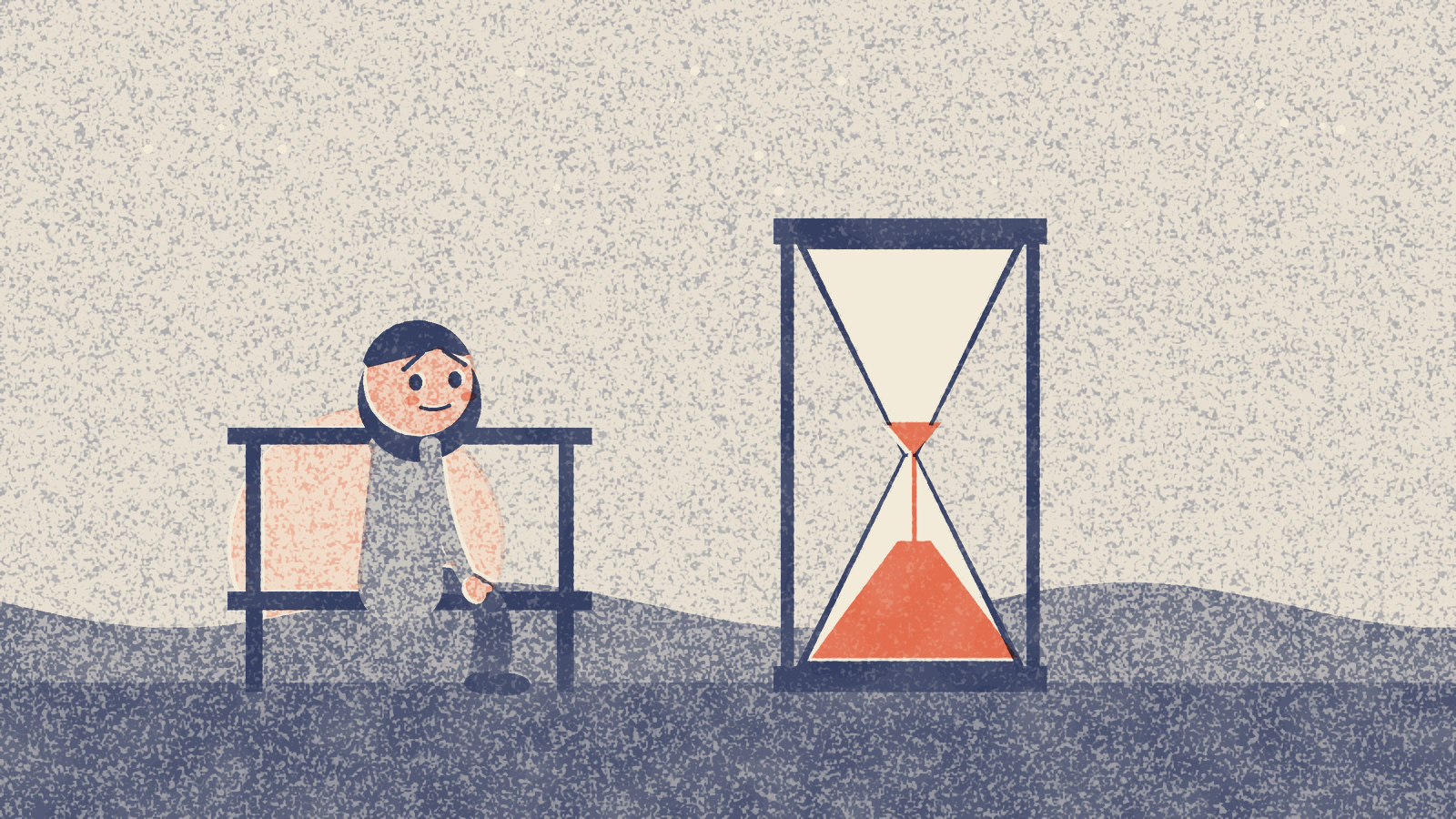
You are standing in a kitchen, or a parking lot, or the glow of a laptop at midnight, and the thought arrives without warning: the years are going by. Birthdays used to feel like events. Now they feel like a number that keeps ticking while you work out what you meant to do with it.
Life is short quotes tend to arrive at moments like this, usually as an image with a sunset behind it and no source underneath. Every line below comes from a named work you can open and read, and the anchor is the essay that gave the idea its sharpest form: Seneca’s On the Shortness of Life.
Key Takeaways
- Seneca’s essay On the Shortness of Life argues that life is long enough for what matters when time is spent deliberately, and its best-known lines are collected below with their section numbers (Seneca, trans. Stewart).
- The line “Life is short, and Art long” opens the Aphorisms attributed to Hippocrates, and Seneca quotes the same idea as a saying already familiar to physicians in his day (Hippocrates, trans. Adams).
- The same concern runs through scripture, poetry and prose: Psalm 90, Marvell, Herrick, Shakespeare and Thoreau each frame the brevity of life in their own register.
- Every quote here is short, attributed to a specific work, and grouped by the moment a reader is likely in: watching years pass, putting things off, being too busy, or choosing to live deliberately.
Seneca and the original essay on life being short
Seneca addressed On the Shortness of Life to a man named Paulinus, and it opens with the complaint that most people grumble about how little time nature gave them. The rest of the essay answers that complaint. In Stewart’s translation, Seneca says we lose a great deal of the time we are given, and that a life arranged well has room for the most important projects.
Stewart’s 1889 translation is in the public domain, and the section numbers below follow his Roman numerals. The whole essay is free to read in the Standard Ebooks edition.
For a wider look at what brevity does to meaning, the page on the brevity of life and what it means follows the question into psychology.
Life is short quotes for when the years feel like they are slipping away
These are for the evening you do the math on how long you have been doing something, or how long you have not started it.
“Life is long enough, if you know how to use it.”
Seneca, On the Shortness of Life, II
The sentence sits early in the essay, right after Seneca asks why we complain of nature. It is the thesis the rest of the work unpacks.
“You fear everything, like mortals as you are, and yet you desire everything as if you were immortals.”
Seneca, On the Shortness of Life, III
Seneca is describing a split most of us live inside: we know the clock is running and we make plans as if it is not.
“How late it is to begin life just when we have to be leaving it!”
Seneca, On the Shortness of Life, III
It comes right after the men who promise themselves leisure after their fiftieth or sixtieth year, and it is Seneca’s short verdict on that plan.
“Life is short, and Art long; the crisis fleeting; experience perilous, and decision difficult.”
Hippocrates, Aphorisms, Section I, 1 (trans. Francis Adams)
This is the first aphorism of the collection, and “Art” there means the craft of medicine. It is the root of the Latin phrase ars longa, vita brevis, and Seneca cites the same saying in the opening section of his essay as a well-known saying of physicians.
“But at my back I always hear / Time’s wingèd chariot hurrying near.”
Andrew Marvell, “To His Coy Mistress”
A seventeenth-century poem, written as an argument for not waiting, and these two lines are the part that outlived the argument.
“Lord, make me to know mine end, and the measure of my days, what it is: that I may know how frail I am.”
Psalm 39:4, King James Version
The speaker asks to see the measure of his days plainly, and that request is the whole prayer.
Life is short quotes for when you keep putting things off
Postponing is the form that brevity takes in daily life. Seneca returns to it again and again.
“Postponement is the greatest waste of life: it wrings day after day from us, and takes away the present by promising something hereafter.”
Seneca, On the Shortness of Life, IX
Seneca names the mechanism: a promise about the future spends the present to pay for itself.
“There is no such obstacle to true living as waiting, which loses today while it is depending on the morrow.”
Seneca, On the Shortness of Life, IX
This clause follows the previous one after a colon, in the same sentence, and the two read well together.
“Everything future is uncertain: live now straightaway.”
Seneca, On the Shortness of Life, IX
It is the shortest instruction in the essay, and perhaps the most quoted.
“Gather ye rosebuds while ye may, / Old Time is still a-flying.”
Robert Herrick, “To the Virgins, to Make Much of Time”
Herrick’s 1648 poem has been quoted so often that the opening line now sounds like a proverb. It started as an address to young women who were putting off a decision.
“Whatsoever thy hand findeth to do, do it with thy might.”
Ecclesiastes 9:10, King James Version
The verse gives the reason in its second half, that nothing can be done in the grave, and the first half is the part people carry with them.
Life is short quotes for when you are too busy to notice
Seneca’s sharpest observations are about busy people, and they land hard on anyone with a full calendar.
“No man knows less about living than a business man: there is nothing about which it is more difficult to gain knowledge.”
Seneca, On the Shortness of Life, VII
He means anyone whose days are spoken for, and the reason follows in the next sentences: learning how to live takes a whole life of attention.
“Every man hurries through his life, and suffers from a yearning for the future, and a weariness of the present.”
Seneca, On the Shortness of Life, VII
Seneca gives examples of the lawyer wishing for vacation and the magistrate wishing the year were over. The description fits any week with a Friday to look forward to.
“No one values time: they give it much more freely, as though it cost nothing.”
Seneca, On the Shortness of Life, VIII
People guard money and property closely, he observes, while handing out hours to anyone who asks.
“What you ought to husband most carefully is that which may run short you know not when.”
Seneca, On the Shortness of Life, VIII
The argument is about uncertainty. If the number of years were printed on a card, we would plan around it, and the fact that it is hidden is the reason to plan now.
“No one will give you back your years, no one will restore them to you again.”
Seneca, On the Shortness of Life, VIII
A plain sentence about irreversibility, set in the middle of a paragraph about generosity with time.
Life is short quotes for choosing to live on purpose
These lines hold the brevity of life and a way of answering it together.
“I went to the woods because I wished to live deliberately, to front only the essential facts of life, and see if I could not learn what it had to teach, and not, when I came to die, discover that I had not lived.”
Henry David Thoreau, Walden, “Where I Lived, and What I Lived For” (1854)
Thoreau gives the reason for two years at Walden Pond in one sentence, and it reads like a purpose statement.
“I wanted to live deep and suck out all the marrow of life.”
Henry David Thoreau, Walden, “Where I Lived, and What I Lived For” (1854)
The same passage, a few lines on. The image is of a person eating a meal down to the bone.
“So teach us to number our days, that we may apply our hearts unto wisdom.”
Psalm 90:12, King James Version
Counting days is presented here as a practice that produces wisdom. Verse 9 of the same psalm says “we spend our years as a tale that is told.”
“Life’s but a walking shadow, a poor player / That struts and frets his hour upon the stage / And then is heard no more.”
William Shakespeare, Macbeth, Act 5, Scene 5
Macbeth speaks these lines in despair after hearing of his wife’s death. They belong to a character at his lowest point, and they remain one of the most direct images of a short appearance on a stage.
“One’s whole life must be spent in learning how to live.”
Seneca, On the Shortness of Life, VII
Seneca closes the thought with a surprise, that the same life must also be spent learning how to die. The learning is the work of a lifetime, and the essay treats that as good news.
What the quotes keep returning to
Read in order, these lines from the first century, the Psalms, the seventeenth century and the nineteenth century keep arriving at one place. Time is the one possession that cannot be borrowed, saved or bought back, and the people who write about it most vividly are the ones who started paying attention to it.
For a gentler look at the same awareness from a psychological angle, the page on the fragility of life sits close to this one, and so does the page on what psychology knows about fear of death. Seneca wrote as a member of the Stoic school, and what Stoicism is lays out the tradition his essay comes from.
Pick one line from this page and carry it into tomorrow morning. The one that bothers you a little is probably the one that has something to say.
Related reading
- Existential Poems: A Small Collection on Death, Freedom, Isolation, and Meaning
- How Common Is Fear of Death? What the Surveys Actually Measure
- Paradox of Life
References
Hippocrates. (n.d.). Aphorisms (F. Adams, Trans.). The Internet Classics Archive. https://classics.mit.edu/Hippocrates/aphorisms.1.i.html
Herrick, R. (1648). To the virgins, to make much of time. In Hesperides.
The Holy Bible, King James Version. (1611). Psalm 39, Psalm 90, Ecclesiastes 9.
Marvell, A. (1681). To his coy mistress. In Miscellaneous poems.
Seneca. (1889). On the shortness of life. In Minor dialogues, together with the dialogue on clemency (A. Stewart, Trans.). George Bell and Sons.
Shakespeare, W. (c. 1606). Macbeth, act 5, scene 5. Folger Shakespeare Library.
Thoreau, H. D. (1854). Walden; or, Life in the woods. Ticknor and Fields.