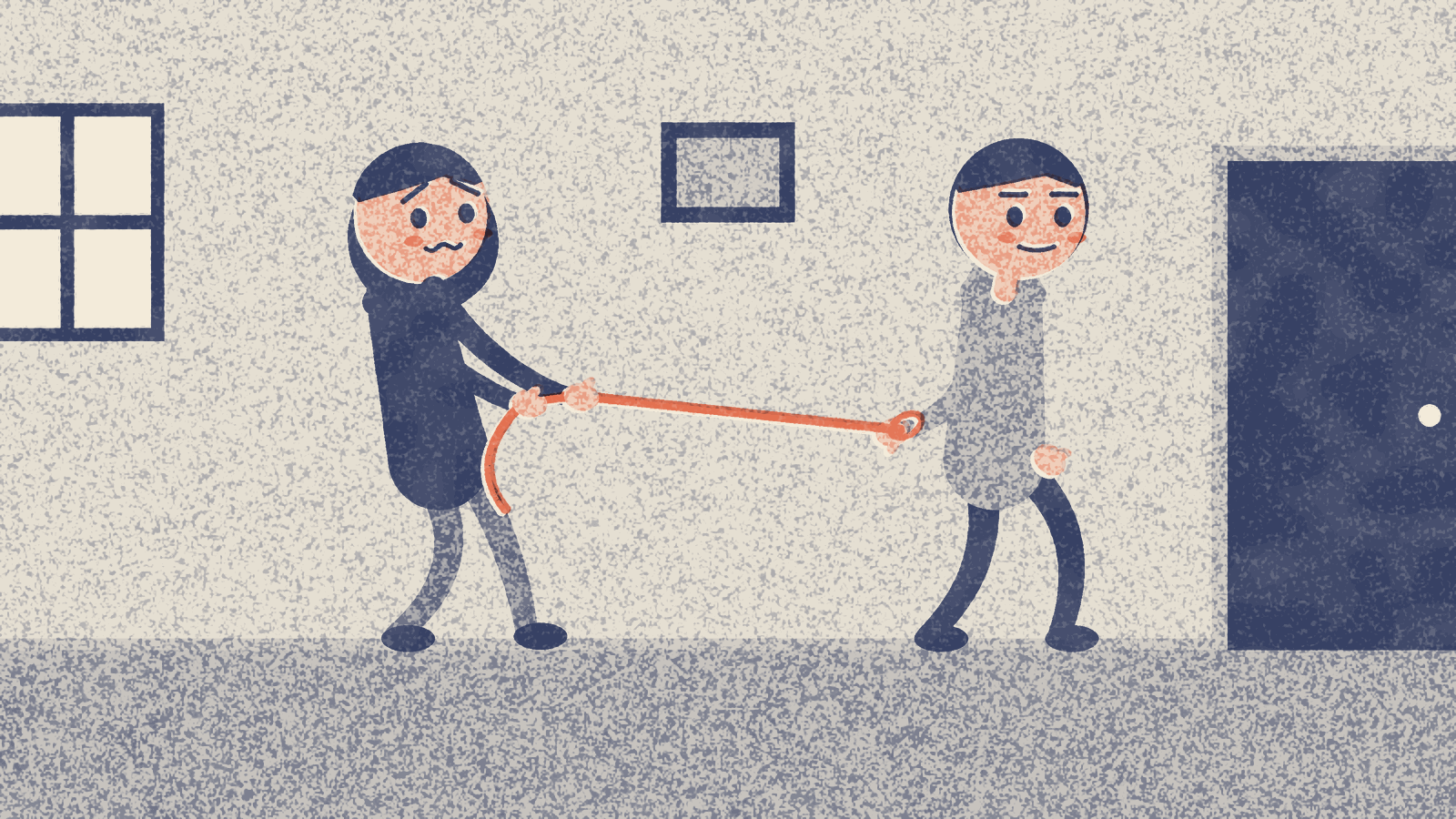
You send a message and watch the screen. Twenty minutes pass, then an hour, and your mind starts writing explanations: they are busy, they are annoyed, they have found someone better. The anxious attachment style is the name researchers give to this pattern, a heightened alertness to signs that a close person might pull away.
Key Takeaways
- The anxious attachment style is a research description of adults who worry about rejection and abandonment in close relationships, and it is a research framework for how people relate in close bonds (Brennan et al., 1998).
- Researchers measure it as one of two dimensions, anxiety (fear of rejection and abandonment) and avoidance (discomfort with closeness and with depending on others), so a person sits somewhere along a scale (Brennan et al., 1998).
- Attachment theory traces the pattern to how the bond between a person and a caregiver shapes later expectations about closeness (Bowlby, 1969).
- Mikulincer and Shaver describe hyperactivating strategies, an intensified bid for closeness and reassurance, as the typical response of anxiously attached people when a partner seems unavailable (Mikulincer & Shaver, 2003).
- In a U.S. national sample published in 1997, 11 percent of adults were classed as anxious, with 25 percent avoidant and 59 percent secure (Mickelson et al., 1997).
What the anxious attachment style actually is
Attachment research began with John Bowlby, who described the attachment system as a built-in drive to seek closeness and comfort from a specific person when we feel threatened (Bowlby, 1969). The system switches on when something feels wrong and switches off when the person we trust responds.
Cindy Hazan and Phillip Shaver carried this idea into adulthood. In their study of romantic love as an attachment process, the same patterns seen in infancy appeared in how grown people bonded with romantic partners (Hazan & Shaver, 1987). One of those patterns became known as anxious or preoccupied attachment.
The modern way to describe it comes from a later piece of measurement work. Brennan, Clark, and Shaver (1998) analysed most of the existing self-report measures of adult romantic attachment and found two broad dimensions underneath them. They named these Anxiety, which covers fear of rejection and abandonment, and Avoidance, which covers discomfort with closeness and with depending on others (Brennan et al., 1998).
On this view, the anxious attachment style describes a person who scores high on the first dimension. Someone who scores low on both is described as secure.
A framework for understanding, and where it stops
Attachment style is a research framework. It organises patterns that show up across many people, and it offers language for experiences that can feel private and confusing.
A questionnaire result describes how you tend to relate in close bonds. It carries no diagnosis, and it can shift across relationships and across years. Everything in this article is informational.
What causes anxious attachment
Attachment theory points first to early experience. Bowlby’s account holds that a child builds expectations about whether a caregiver will be there when needed, and those expectations become a template for later closeness (Bowlby, 1969).
Mikulincer and Shaver describe how this template works. When a person’s bids for closeness meet inconsistent availability, the system can settle into a strategy of turning the alarm up. They call it hyperactivation, an intensified pursuit of proximity that continues even in the face of repeated evidence that the other person is unavailable (Mikulincer & Shaver, 2003).
Three points are worth holding at once:
- Early caregiving is one pathway in the theory, and the research tradition treats it as one influence among several.
- The same template can be revised by later relationships, which is why a person can be more secure with one partner than with another.
- A pattern learned for good reasons in one setting can carry a high cost in another.
Signs of the anxious attachment style in relationships
Anxious attachment in relationships tends to cluster around a few recognisable experiences. In the research description, hyperactivation involves vigilance, preoccupation, and energised behaviour aimed at securing a partner’s attention and support (Mikulincer & Shaver, 2003). In daily life, that can look like:
- Reading meaning into small changes, such as a shorter reply, a delayed text, or a different tone of voice.
- Needing frequent reassurance, and finding that it settles things for an hour or a day before the worry returns.
- Thinking about the relationship for much of the day, replaying conversations and rehearsing new ones.
- Feeling a surge of distress when a partner is distant, busy, or quiet.
- Reaching toward a partner harder as they seem to move away, through calls, messages, or long conversations about the state of things.
- Setting aside your own needs and plans to keep the connection steady.
These signs are what the research calls protest, the intensified response to a bond that feels under threat. Each one makes sense from inside, since each is an attempt to restore closeness. Seen from outside, the same behaviours can leave a partner feeling watched or pressured, which sometimes produces the very distance the person fears.
How it feels from the inside
The anxious attachment style often comes with a particular kind of mental weather. Calm arrives when a partner is warm and present, and unease returns the moment the signal fades. The mind becomes an alarm system that reads silence as danger.
That loop sits close to what happens in self-sabotage, where fear of loss shapes behaviour that puts the relationship at risk. The self-sabotage and avoidant attachment page looks at the other end of the attachment map, where closeness is the threat and distance is the response. Reading both ends together makes each pattern easier to see.
For a longer look at how the attachment system shapes dissatisfaction in love, the piece on feeling unfulfilled in a relationship follows the same research thread through Bowlby, Ainsworth, and Hazan and Shaver.
How common it is
In a nationally representative U.S. sample published in 1997, 11 percent of adults were classed as anxious, 25 percent as avoidant, and 59 percent as secure (Mickelson et al., 1997). Those figures come from one study and its way of classifying people. The page on how many people have an insecure attachment style sets that study beside two others and explains what each one counted.
Working with the pattern
In this framework, anxiety is a matter of degree. A few modest, practical things may help:
- Notice the moment the alarm switches on, and name it as attachment activation. Naming the experience gives it edges.
- Let the first interpretation stay a guess. A delayed reply has many possible causes, and the mind’s first story is one candidate among them.
- Tell a partner what you need in plain terms, and ask for it directly. A clear request carries more information than a test.
- Build a few sources of steadiness that belong to you, such as friendships, work you care about, and routines that hold when a relationship wobbles.
- Look at where fear of loss has started to steer your choices, a theme explored in how to stop self-sabotaging relationships.
If this pattern causes you steady distress or colours most of your close relationships, a licensed therapist can work with you on it in a way an article cannot, and many people find that kind of support useful.
Sitting with the question underneath
Underneath the texts and the waiting sits an old, reasonable question: will you be there when I need you? The anxious attachment style is a mind that learned to ask it loudly.
Over time the question can find better answers. Some come from a partner who responds steadily, and some come from you, as you learn that you can feel the alarm and stay with yourself while it passes.
It may be worth noticing, the next time the screen stays quiet, what your body does first and what story arrives second. That small gap between the two is where a different response begins.
Related reading
References
Bowlby, J. (1969). Attachment and loss: Vol. 1. Attachment. Basic Books.
Brennan, K. A., Clark, C. L., & Shaver, P. R. (1998). Self-report measurement of adult romantic attachment: An integrative overview. In J. A. Simpson & W. S. Rholes (Eds.), Attachment theory and close relationships (pp. 46-76). Guilford Press.
Hazan, C., & Shaver, P. R. (1987). Romantic love conceptualized as an attachment process. Journal of Personality and Social Psychology, 52(3), 511-524.
Mickelson, K. D., Kessler, R. C., & Shaver, P. R. (1997). Adult attachment in a nationally representative sample. Journal of Personality and Social Psychology, 73(5), 1092-1106.
Mikulincer, M., & Shaver, P. R. (2003). The attachment behavioral system in adulthood: Activation, psychodynamics, and interpersonal processes. In M. P. Zanna (Ed.), Advances in experimental social psychology (Vol. 35, pp. 53-152). Academic Press.