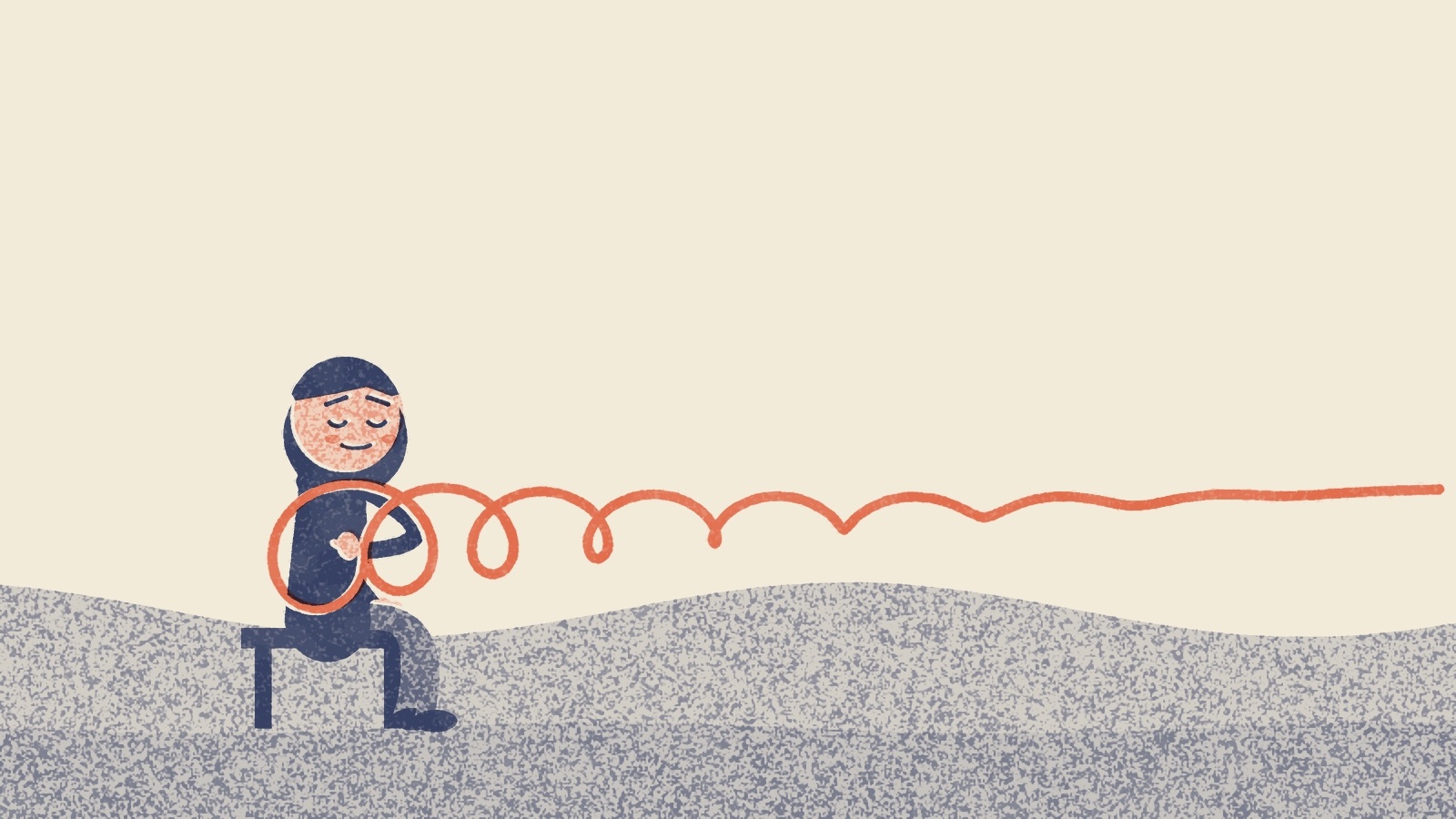
Something happened on Tuesday, and by Thursday you are still carrying it. You answered emails, made dinner, laughed at the right moments, and underneath all of it a heaviness stayed put, as if the feeling were waiting for a turn that never came. People ask how to process emotions when they notice exactly this: a feeling that was acknowledged for half a second and then shelved.
The research gives “processing” a more concrete shape than the word suggests. It describes a handful of things you can do with a feeling, each with its own evidence and its own limits.
Key Takeaways
- Processing an emotion means letting it be felt, named and made sense of until its charge settles, which is something you can observe in yourself as a drop in intensity or a shift in how the event sits in memory.
- In a 2007 fMRI study, putting a feeling into words (affect labeling) reduced amygdala response to emotional images and increased activity in the right ventrolateral prefrontal cortex (Lieberman et al., 2007).
- Expressive writing studies began with 46 undergraduates writing for 15 minutes a night over four nights; writing about both the emotions and the facts of a trauma was associated with relatively higher blood pressure and more negative mood right after the essays, and with fewer health center visits in the following six months (Pennebaker & Beall, 1986).
- A 2006 meta-analysis of 146 randomized studies of experimental disclosure found a positive average effect of r = .075, which is small and varies with who writes and how (Frattaroli, 2006).
- Repetitive thought can be constructive or unconstructive, and one of the factors involved is whether the thinking stays abstract or concrete (Watkins, 2008).
What it means to process an emotion
To process an emotion is to let it move through the whole sequence it was built for: it arrives, you feel it in the body, you give it a name, you work out what it is about, and it eases. An emotion that completes this path tends to leave a person with a clearer picture of the event and less pull from it.
An emotion that gets interrupted at the first step stays available. It shows up later as irritability, a flat afternoon, a sudden flood over something small. The piece on emotional numbness follows that thread to its far end, where dimmed feeling becomes a habit.
Processing and regulating overlap. Regulation is the toolkit for shaping how strong a feeling gets and how it is expressed, and it has its own page: emotional regulation skills covers Gross’s process model and the practices around it. This page stays with the work of feeling something through.
Naming it: what affect labeling does
Affect labeling is the plainest processing move there is. You find a word for what you feel.
In the fMRI study by Matthew Lieberman and colleagues, participants viewed emotional images while either labeling the emotion or doing something else with the image. Labeling reduced amygdala activity and increased activity in the right ventrolateral prefrontal cortex (Lieberman et al., 2007). The finding comes from a controlled lab task, so it describes a mechanism worth knowing about and says little on its own about a hard week in a real life.
In practice, the word matters. “Bad” covers almost nothing. These are closer:
- Disappointed, because something you expected did not arrive.
- Embarrassed, because someone saw you get it wrong.
- Resentful, because you gave more than you got back.
- Lonely, because the room was full and nobody was with you.
Try two or three candidate words and notice which one makes your shoulders drop a little. That small release is the signal that the label fits.
Writing it through: expressive writing
Expressive writing is the most studied processing practice. James Pennebaker and Sandra Beall (1986) had 46 undergraduates write about either a personal trauma or trivial topics for 15 minutes a night on four consecutive nights. The students who wrote about both the emotions and the facts of a trauma had relatively higher blood pressure and more negative mood right after the essays, and fewer health center visits over the following six months (Pennebaker & Beall, 1986). The authors called the findings preliminary.
A decade later, Pennebaker summarized the line of work: writing about emotional experiences was followed by improvements in physical and mental health (Pennebaker, 1997).
The effect size deserves honest handling. Frattaroli’s meta-analysis of 146 randomized studies reported a positive average effect of r = .075 (Frattaroli, 2006). That is small, and the analysis identified moderators, which means results vary with the sample, the topic and the instructions.
A version you can try this week:
- Set a timer for 15 minutes and write about one event that still has a charge.
- Write what happened, then what you felt, then what you think it meant.
- Keep the pen moving without editing. Nobody reads it.
- Stop when the timer ends, even mid-sentence, and do something ordinary for ten minutes.
- Repeat on three or four evenings if it helps.
Feeling worse right afterward matches what the original study recorded, so a heavy evening after writing is part of the pattern.
How to process emotions when the feeling lives in your body
Emotions have a physical address. Tight chest, hot face, a hollow stomach, a jaw clamped shut. Processing through the body means turning attention to that location and describing it as plainly as you would describe the weather.
The research base for this particular practice is thinner than for labeling and writing, so treat it as a practice and keep the claims small. What is easy to observe is that sensations rise, plateau and fade when attention rests on them for a minute or two, and that naming the sensation tends to bring the label along: the knot in the stomach turns out to be dread about Friday’s meeting.
A short sequence:
- Find where the feeling sits and put one hand there.
- Describe it in physical terms: size, temperature, pressure, edges.
- Breathe at an ordinary pace and watch whether the sensation shifts.
- When it settles, ask what the feeling was pointing at.
Processing and rumination: two ways of staying with a feeling
Both involve staying with something painful, which is why they get confused.
Processing has an arc. It moves toward a word, a meaning, a plan, or a quiet ending. At the close of a session you know a little more than when you began.
Rumination is repetitive thought that circles the same material at the same altitude. Watkins’s review of repetitive thought lists three principles for when it turns constructive or unconstructive: the valence of the content, the person’s context, and the level of construal, meaning whether the thinking runs abstractly or concretely (Watkins, 2008). That last principle gives you a working check. “Why am I like this?” is an abstract question that can run all night. “What did she say, what did I feel in my body, what is one thing I can do tomorrow?” is concrete, and it has an end.
After a failed romance in my psychology student days, I amplified my feelings on purpose and told myself a psychology student could indulge in sadness and bounce back at will. Within about a year the habit had spread into how I spoke to myself about work and discipline, and I summed it up as making my own mind the enemy. The full story is in stop making your mind the enemy.
If you want the longer treatment of the loop itself, rumination vs overthinking maps the two patterns side by side.
When to go slowly
Expressive writing and body attention bring feeling closer, and that is a lot for some experiences. Acute trauma, a recent crisis, or a feeling that floods you every time you approach it calls for a slower pace and for company. If processing leaves you overwhelmed for days, or the same memory keeps arriving uninvited, a licensed therapist can walk through it with you at a speed your system can hold.
Short sessions help. Fifteen minutes with a clear end point, a grounding activity afterward, and permission to stop all keep the practice safe enough to repeat.
What a processed feeling leaves behind
Feelings that have been processed leave a trace of understanding. You recall the event and it has edges now. The sting is still there, a little smaller, attached to a story you can tell.
Delay has its own emotional logic. The article on procrastination and emotions shows how an avoided feeling can steer behavior for weeks. Whatever you have been carrying since Tuesday may only need a word, fifteen minutes and a quiet room.
Related reading
- Emotional Regulation Worksheets: Four DBT Skills You Can Write Out
- What Is Self-Compassion? The Definition, Its Three Parts, and Where It Sits
- Inner Critic Exercises: Three Practices You Can Write Out
References
Frattaroli, J. (2006). Experimental disclosure and its moderators: A meta-analysis. Psychological Bulletin, 132(6), 823-865.
Lieberman, M. D., Eisenberger, N. I., Crockett, M. J., Tom, S. M., Pfeifer, J. H., & Way, B. M. (2007). Putting feelings into words: Affect labeling disrupts amygdala activity in response to affective stimuli. Psychological Science, 18(5), 421-428.
Pennebaker, J. W. (1997). Writing about emotional experiences as a therapeutic process. Psychological Science, 8(3), 162-166.
Pennebaker, J. W., & Beall, S. K. (1986). Confronting a traumatic event: Toward an understanding of inhibition and disease. Journal of Abnormal Psychology, 95(3), 274-281.
Watkins, E. R. (2008). Constructive and unconstructive repetitive thought. Psychological Bulletin, 134(2), 163-206.