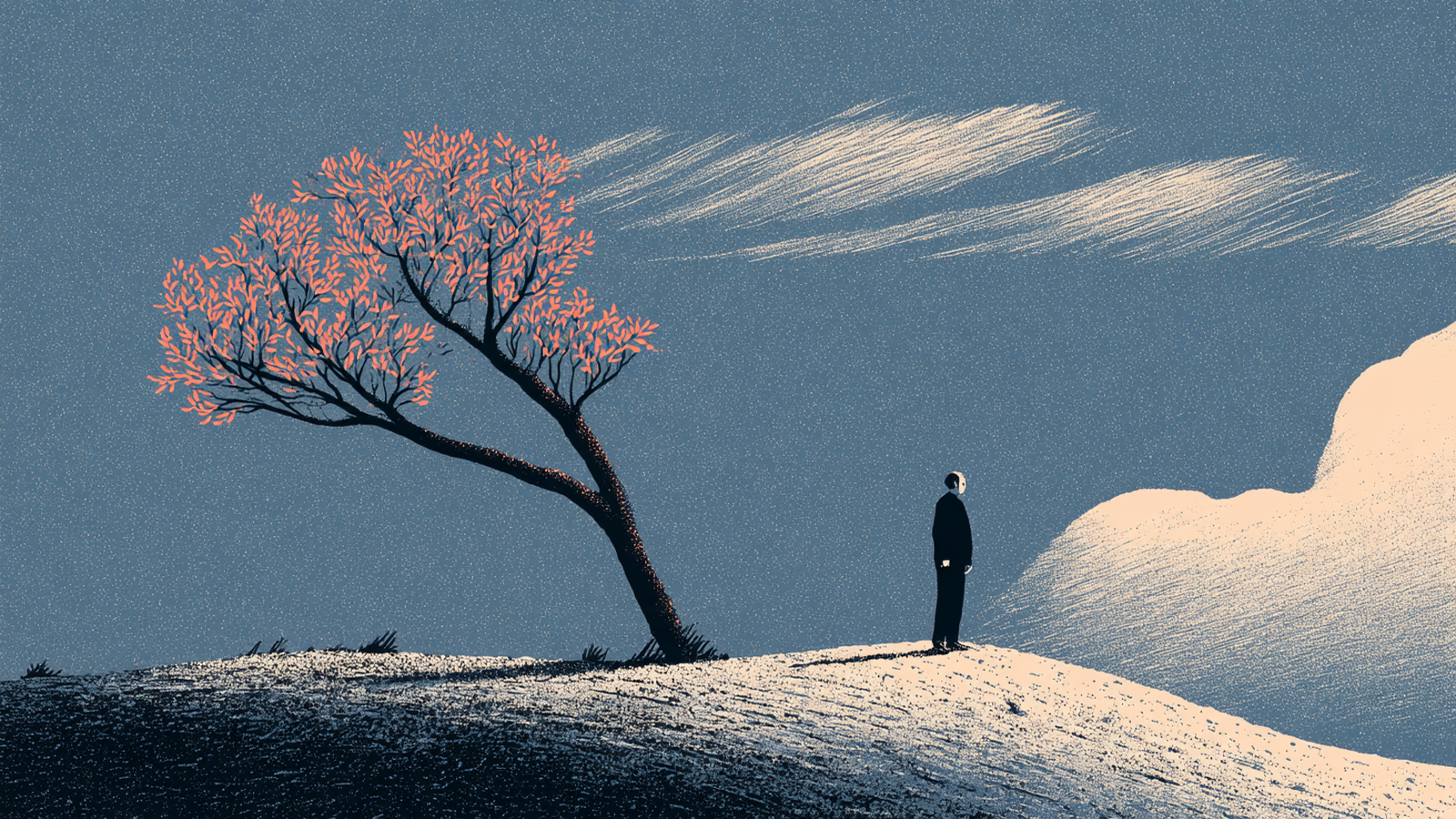
Think of someone you know who went through something hard, a layoff, an illness in the family, a relationship that ended, and who seemed to find their footing again sooner than you expected. You may have called that person strong, or tough, or just built differently. The question of what resilience is begins with that observation, and the research has a more surprising answer than most of us carry around.
Key Takeaways
- The American Psychological Association defines resilience as “the process of adapting well in the face of adversity, trauma, tragedy, threats or even significant sources of stress” (Southwick et al., 2014).
- Ann Masten’s review of resilience in child development concluded that resilience is common and usually arises from the normal functioning of human adaptational systems (Masten, 2001).
- George Bonanno’s research reviews describe resilience as a distinct trajectory from recovery, more common than is often believed, with multiple and sometimes unexpected pathways to it (Bonanno, 2004).
- A panel of leading resilience researchers agreed that resilience is a complex construct, that it may be defined differently for individuals, families, organizations and cultures, and that its study needs many levels of analysis (Southwick et al., 2014).
- The same panel described resilience as something that may be present to different degrees across different areas of life and may change over time (Southwick et al., 2014).
What is resilience in psychology?
In everyday speech, resilience is often shorthand for bouncing back, and psychologists define it in several more specific ways. The American Psychological Association’s definition describes it as the process of adapting well in the face of adversity, trauma, tragedy, threats or significant sources of stress, and that wording is quoted in the 2014 paper by Southwick and colleagues.
The key word in that definition is process. Resilience unfolds over time, inside a life, in response to something that happened. The same paper notes that it matters whether resilience is being treated as a trait, a process or an outcome, because those are three different claims.
Researchers who study it do not share one wording. The four panelists who offered a definition in that paper each phrased it differently, and most of the proposed definitions included a concept of healthy, adaptive or integrated positive functioning over time after adversity.
Where the idea of ordinary magic comes from
Ann Masten spent years studying children who grew up under disadvantage and threat. Her 2001 paper in American Psychologist reports that the most surprising conclusion from that work was the ordinariness of resilience (Masten, 2001).
Her reading of the evidence was that resilience is common and usually arises from the normal functioning of human adaptational systems. She also concluded that the greatest threats to development are the ones that damage these protective systems.
That reframing carries weight. A quality that comes from ordinary processes belongs to many people. It also points toward what supports it: protecting the adaptational systems a person already has.
What trajectory research found about loss and trauma
George Bonanno approached the same subject from the adult side. In a 2004 review, he noted that much of what psychology knew about how adults cope with loss or trauma came from people who sought treatment or showed great distress. Theorists consequently tended to view resilience as rare or even pathological (Bonanno, 2004).
His review gathered evidence for three points:
- Resilience is a distinct trajectory from recovery. In the abstract’s wording, people showing resilience have only minor and transient disruptions in their ability to function.
- Resilience after loss or potential trauma is more common than is often believed.
- There are multiple and sometimes unexpected pathways to it.
In the 2014 panel, Bonanno described the resilience trajectory as a relatively brief period of disequilibrium followed by continued health, and said it is very common in the studies his group has run over the years (Southwick et al., 2014).
Many people go through a hard stretch and keep a basic sense of who they are and how to live. If you have done that, you may be among the people those studies describe, even if it never felt like strength from the inside.
Why the definition keeps shifting
The 2014 panel is useful because it shows experts disagreeing in the open. Their answers describe four different pictures:
- Bonanno: a stable trajectory of healthy functioning after a highly adverse event.
- Rachel Yehuda: a process of moving forward in an insightful, integrated way, which can exist alongside symptoms of post-traumatic stress.
- Masten: the capacity of a dynamic system to adapt successfully to disturbances that threaten its function or development.
- Catherine Panter-Brick: a process of harnessing resources to sustain well-being.
Each definition fits the population its author studies. Bonanno follows adults through acute events. Masten works with children, families and systems. Panter-Brick works in settings of poverty and violence, where she asks which resources matter to the people living there.
Taken together, the portraits say that resilience is a family of ideas with a shared center: adaptation to adversity over time.
Resilience sits in many domains, and it changes
The panel’s opening discussion adds a point that is easy to miss. Resilience likely exists on a continuum and may be present to different degrees across different parts of life. A person who adapts well to stress at work may fail to adapt well in personal life or in relationships (Southwick et al., 2014).
It also changes with development and context. The panel’s example is maternal care, which may support resilience in infancy and later interfere with a young adult’s growing independence.
This is worth sitting with if you have ever called yourself “not a resilient person” because one area of life went badly. A single area is a small sample. Burnout at work, for instance, is a pattern worth understanding on its own terms, and how common burnout is depends on what each survey counts.
Resilience happens between people and systems
Southwick and colleagues write that our response to stress takes place in interaction with other people, available resources, cultures, organizations, communities and societies. Each of those contexts may be more or less resilient and therefore more or less able to support the individual (Southwick et al., 2014).
The panel agreed that determinants of resilience span genetic, developmental, demographic, cultural, economic and social variables. They also noted that resilience may be enhanced at several levels, including individual, family, community and culture.
The panel describes each of those contexts as more or less capable of supporting the individual, so what a person has to draw on depends partly on the people and systems around them. Early adversity makes the point concrete, and how many people have adverse childhood experiences shows how widespread early stress is.
The panel noted that resilience may be enhanced at the individual, family, community and culture levels, so the individual is one level among several.
What resilience can look like in an ordinary life
The panel’s descriptions point to a few patterns you can recognize:
- Continuing to function, even imperfectly, after a hard event.
- Drawing on relationships and resources when something goes wrong.
- Letting the struggle exist and still moving forward, which Yehuda’s definition makes room for.
- Changing course over time as circumstances and needs change.
Resilience also coexists with distress. Yehuda said in the same panel that some of the most resilient people she knows may have had or still have very severe PTSD that they struggle with every day.
Two practices on this site sit close to these patterns. Self-compassion describes how a person speaks to themselves when things go wrong. Emotional regulation skills cover how feelings get managed in the moment. Both can sit inside that broader picture.
Resilience after endings and losses
Endings test the idea quickly. When a marriage ends, identity itself gets rewritten, and starting over after divorce describes what that rebuilding involves. A person in that position may feel disoriented, and Bonanno’s description of the resilience trajectory includes a relatively brief period of disequilibrium.
For loss that runs deep, such as a death in the family, or for trauma that keeps intruding on daily life, a doctor or licensed mental health professional is the right person to talk to. Resilience research describes patterns across populations. It cannot say how your own experience will go, and needing support is compatible with everything above.
A quieter way to hold the question
Resilience, as Masten describes it, usually arises from the normal functioning of human adaptational systems, and the 2014 panel places it among people, resources and communities.
You might look at your own history with that in mind. Think of a time something went wrong and you kept going. Who or what was around you then? That question tends to reveal more than any list of traits.
Related reading
- What Is Self-Compassion? The Definition, Its Three Parts, and Where It Sits
- Emotional Regulation Skills: What the Research Says Works and How to Practice It
- Self-Compassion Exercises
References
Bonanno, G. A. (2004). Loss, trauma, and human resilience: Have we underestimated the human capacity to thrive after extremely aversive events? American Psychologist, 59(1), 20-28.
Masten, A. S. (2001). Ordinary magic: Resilience processes in development. American Psychologist, 56(3), 227-238.
Southwick, S. M., Bonanno, G. A., Masten, A. S., Panter-Brick, C., & Yehuda, R. (2014). Resilience definitions, theory, and challenges: Interdisciplinary perspectives. European Journal of Psychotraumatology, 5, 25338.