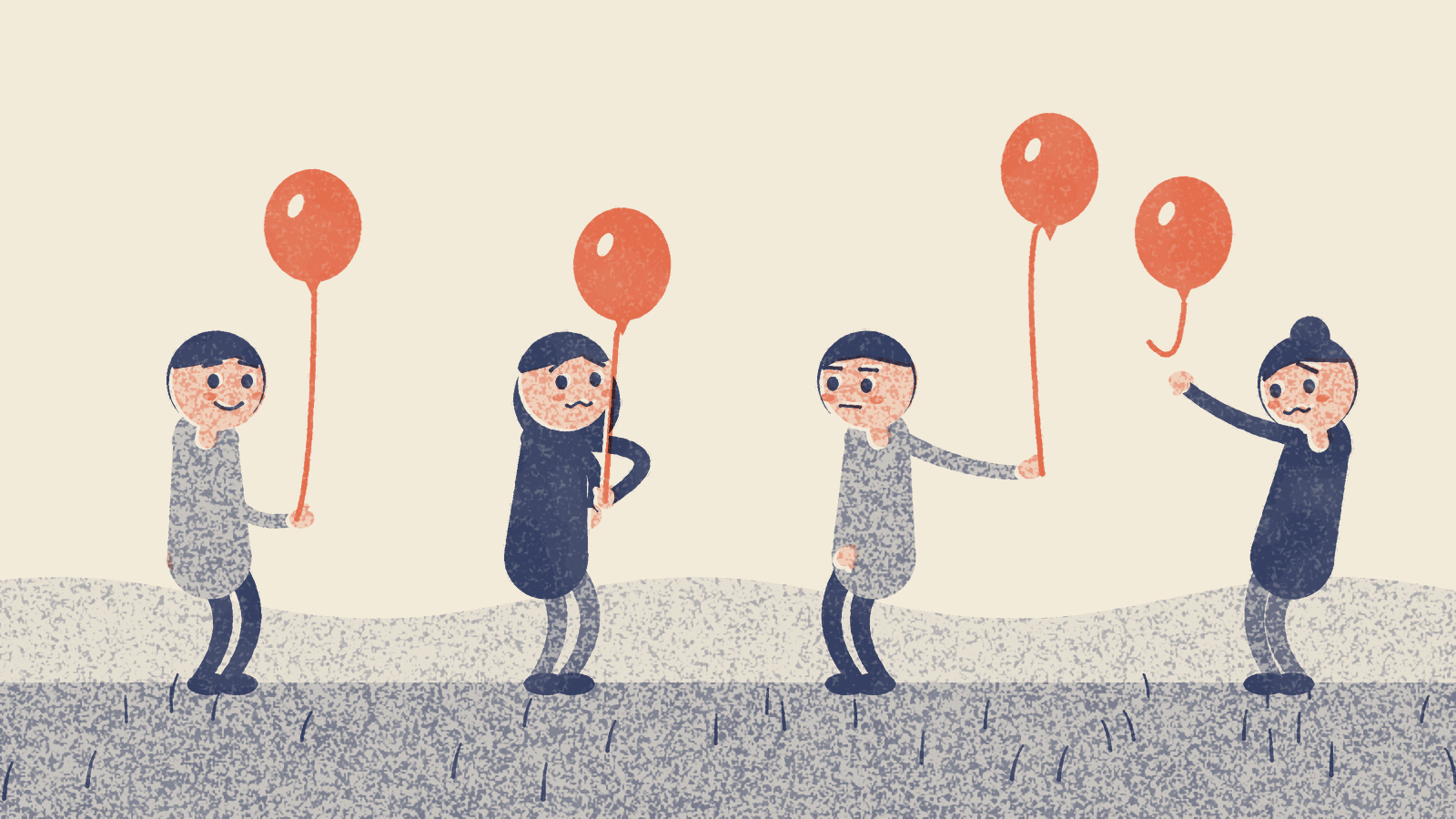
Two people go quiet after an argument. One of them checks the phone every few minutes and rehearses apologies. The other feels a calm settle in, a wish for the whole thing to dissolve into silence. Both are protecting something, and they protect it in different ways. Attachment styles are the name researchers give to these recurring ways of handling closeness, and they offer a map for patterns that otherwise feel personal and mysterious.
Key Takeaways
- Attachment styles are research descriptions of how people tend to bond and respond to threat in close relationships, with roots in the infant-caregiver work of Bowlby and Ainsworth (Hazan & Shaver, 1987).
- Hazan and Shaver (1987) adapted the three infant styles (secure, avoidant, anxious/ambivalent) to adult romantic love in two questionnaire studies, and found each style related to how people experience romantic love (Hazan & Shaver, 1987).
- Bartholomew and Horowitz (1991) proposed four styles, each combining a positive or negative image of the self with a positive or negative image of others, and found each style tied to a distinct profile of interpersonal problems (Bartholomew & Horowitz, 1991).
- Many researchers now measure attachment on two continuous dimensions, anxiety and avoidance, and the Fraley lab’s measures page describes the familiar styles as regions in a two-dimensional space (Brennan et al., 1998).
- In one U.S. nationally representative sample published in 1997, about 59 percent of adults were classed as secure, 25 percent as avoidant and 11 percent as anxious (Mickelson et al., 1997).
What attachment styles are
An attachment style is a pattern in how a person seeks closeness, handles distance and reads a partner’s availability. The word “style” covers a tendency across many moments, and the framework comes from research on close relationships. Everything here is informational, a way of naming patterns many people recognize.
The framework grew from developmental psychology. John Bowlby and Mary Ainsworth built the first concepts around infants and their caregivers, and Hazan and Shaver (1987) carried those concepts into adult romantic relationships.
Where the theory comes from
Ainsworth and her colleagues studied how infants respond to a caregiver’s absence and return in a laboratory procedure called the Strange Situation. Their book Patterns of Attachment reports the methods and key results of Ainsworth’s Baltimore longitudinal study (Ainsworth et al., 1978), and the publisher’s description credits it with helping define concepts that have roots in the Strange Situation and the secure base concept.
Hazan and Shaver then asked whether romantic love works as an attachment process. Their abstract names the three major styles of attachment in infancy as secure, avoidant, and anxious/ambivalent (Hazan & Shaver, 1987). Their paper centered on three infant attachment styles and on the idea that people carry internal models of themselves and of relationships, and that these models help keep a style consistent over time. They proposed that a person’s style is partly shaped by how parents treated them in childhood, and across two questionnaire studies the share of people in each of the three styles in adulthood was about the same as in infancy (Hazan & Shaver, 1987).
That lineage explains why attachment language carries words like “bond,” “secure base” and “separation.” The framework began with the question of how a small child stays safe, and it grew into a question about how adults stay close.
The four attachment styles
Bartholomew and Horowitz (1991) proposed a four-category model of adult attachment. Each of the four patterns combines a positive or negative image of the self with a positive or negative image of others (Bartholomew & Horowitz, 1991). The Fraley lab page that collects attachment measures names the four patterns as secure, fearful-avoidant, preoccupied and dismissing-avoidant (Brennan et al., 1998). The page on the anxious attachment style follows one of these patterns in detail.
The Fraley lab page names two avoidant patterns, fearful-avoidant and dismissing-avoidant. The page on the avoidant attachment style describes both types. The piece on why avoidants self-sabotage looks at how each one behaves when a good relationship starts to deepen.
R. Chris Fraley’s overview of adult attachment research uses its own labels (secure, anxious-resistant and avoidant, with avoidant adults split into fearfully-avoidant and dismissing-avoidant) and describes them in everyday terms (Fraley, n.d.):
- Secure: adults who feel confident that their partners will be there when needed.
- Anxious-resistant: adults who worry that others may not love them completely.
- Avoidant: adults who may appear not to care much about close relationships.
- Fearfully-avoidant and dismissing-avoidant: the overview says some avoidant adults, called fearfully-avoidant, are poorly adjusted despite their defensive nature, while others, called dismissing-avoidant, use defensive strategies in an adaptive way.
In Bartholomew and Horowitz’s studies, each style showed a distinct profile of interpersonal problems, according to both self-reports and the reports of friends (Bartholomew & Horowitz, 1991). A style is a description of tendencies, and the same person can show a mixture.
Attachment styles as dimensions
Categories make a tidy picture, and the measurement tradition has moved toward a looser one. Brennan, Clark and Shaver (1998) reported a large-sample factor analysis that included all known self-report measures of adult romantic attachment in a single analysis, and the two dimensions it yielded are Anxiety and Avoidance. The Fraley lab page that collects these measures notes that underlying the four styles are two dimensions, Model of Self and Model of Other, which the authors prefer to call Anxiety and Avoidance (Brennan et al., 1998).
The same page recommends dimensional measurement. It cites Fraley and Waller (1998) as finding no evidence for a true attachment typology, and describes the traditional styles as regions in a two-dimensional space (Brennan et al., 1998).
In practice, that gives a useful way of reading yourself:
- Anxiety runs from low to high: how much you worry about rejection and abandonment.
- Avoidance runs from low to high: how much discomfort you feel with closeness and with depending on others.
- The named styles are neighborhoods on that map.
How common each style is
Early adult attachment research leaned on college students and people in distress. Mickelson, Kessler and Shaver (1997) looked at a large, nationally representative sample of American adults, and about 59 percent were classed as secure, 25 percent as avoidant and 11 percent as anxious. The abstract does not describe the remaining share (Mickelson et al., 1997).
In the same study, interpersonal adversities in childhood were strongly associated with insecure attachment in adulthood (Mickelson et al., 1997). These figures come from one sample and one way of sorting people into three groups. The page on how many people have an insecure attachment style sets this study beside two others and explains what each one counted.
Can attachment styles change?
The honest answer has several layers. Hazan and Shaver described internal models that help keep a style consistent over time (Hazan & Shaver, 1987). Bartholomew and Horowitz assessed attachment styles with family and with peers separately and found that the two were correlated (Bartholomew & Horowitz, 1991).
A dimensional view adds a further point. A person who sits near the edge of a neighborhood can drift across a line with a small change in score.
How much and how fast a style changes across a lifetime is an active research question, and this article does not offer a figure for it. What can be said is that a style describes a tendency. The same mind that learned a pattern in one setting meets new settings all the time, and later relationships give it new information. The piece on feeling unfulfilled in a relationship follows how the attachment system shapes dissatisfaction in love.
Using the map well
Reading yourself through this framework works best with a light touch. A few starting points:
- Notice which dimension your worry lives on. Does closeness feel like a threat of loss, a threat of engulfment, or both?
- Treat a quiz result as a conversation opener with yourself. A questionnaire score describes how you tend to answer on a given day.
- Look at your patterns across relationships, including friendships and family, and note where they stay constant and where they shift.
- Share the language with a partner as curiosity. “I tend to reach harder when you go quiet” gives a partner something specific to work with.
If your patterns in close relationships cause steady distress, a licensed therapist can work with you on them in ways an article cannot, and many people find that support useful.
What the map leaves open
Each attachment style is a recurring way of handling closeness, and each one can be read as an attempt to stay safe in close relationships.
Somewhere in that picture is a version of you, and probably a few neighbors. It may be worth noticing which relationships bring out which one, and what each of them is trying to protect.
Related reading
- How to Stop Self-Sabotaging Relationships
- What Is Self-Sabotaging in Relationships
- Am I Self-Sabotaging My Relationship?
Related reading: How Common Is Workaholism? What Each Cut-Off Counts and How to Stop Self-Sabotaging.
References
Ainsworth, M. D. S., Blehar, M. C., Waters, E., & Wall, S. (1978). Patterns of attachment: A psychological study of the strange situation. Erlbaum.
Bartholomew, K., & Horowitz, L. M. (1991). Attachment styles among young adults: A test of a four-category model. Journal of Personality and Social Psychology, 61(2), 226-244.
Brennan, K. A., Clark, C. L., & Shaver, P. R. (1998). Self-report measurement of adult romantic attachment: An integrative overview. In J. A. Simpson & W. S. Rholes (Eds.), Attachment theory and close relationships (pp. 46-76). Guilford Press.
Fraley, R. C. (n.d.). A brief overview of adult attachment theory and research. University of Illinois at Urbana-Champaign. https://labs.psychology.illinois.edu/~rcfraley/attachment.htm
Hazan, C., & Shaver, P. R. (1987). Romantic love conceptualized as an attachment process. Journal of Personality and Social Psychology, 52(3), 511-524.
Mickelson, K. D., Kessler, R. C., & Shaver, P. R. (1997). Adult attachment in a nationally representative sample. Journal of Personality and Social Psychology, 73(5), 1092-1106.