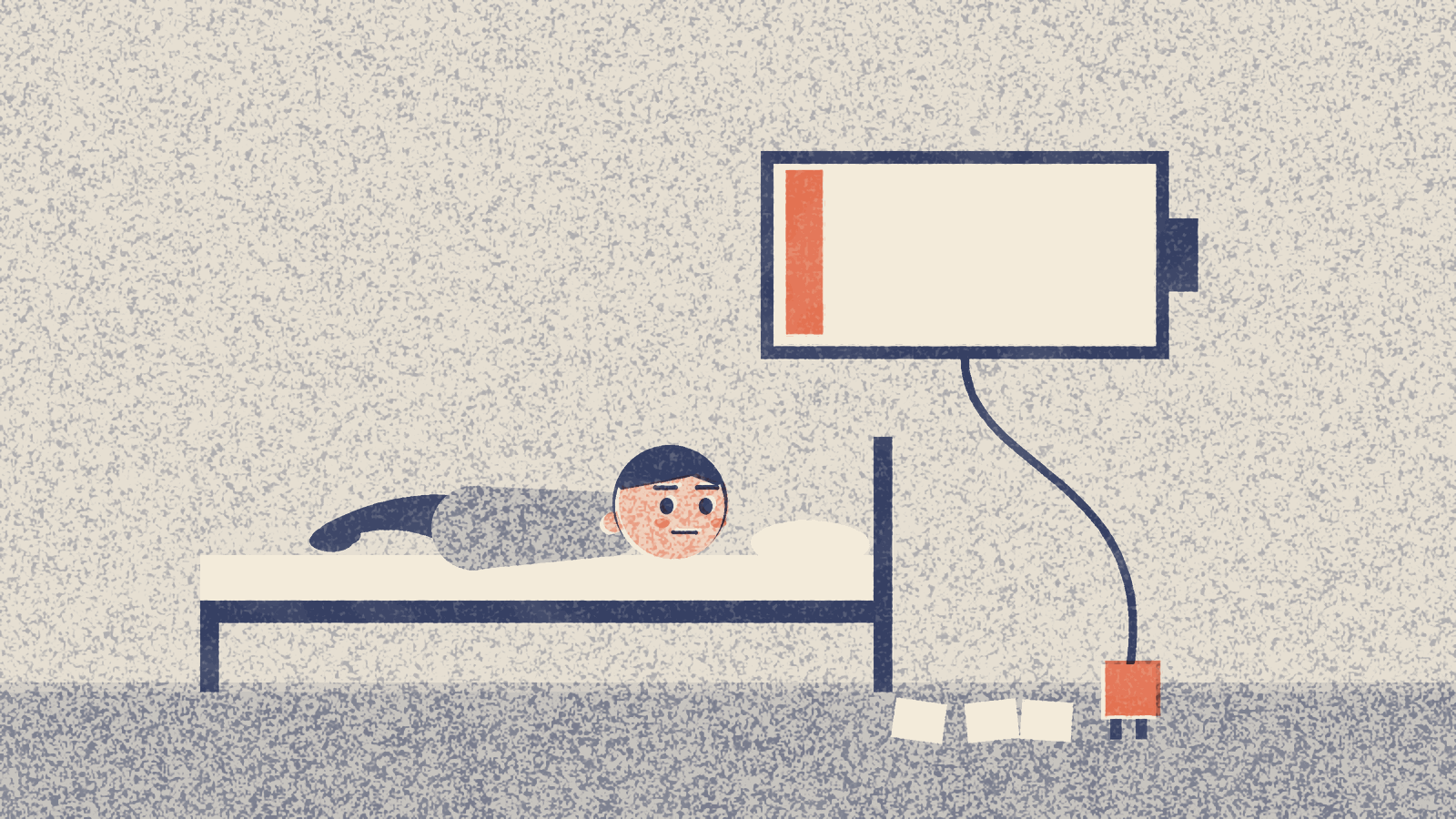
You have a task you meant to start two hours ago. The cursor blinks, the afternoon slides by, and a voice in your head supplies the verdict it always supplies: you are lazy. The word arrives fast and feels like an explanation. It also ends the inquiry, because once the verdict is in, nobody asks what the afternoon was actually made of.
Laziness Does Not Exist, the title of a 2021 book by Devon Price, is a phrase that reopens that inquiry. It has traveled far beyond the book. Here is where it comes from, what it gets right, and where its edges are.
Key Takeaways
- “Laziness Does Not Exist” is a 2021 book by Devon Price, published by Atria Books, which argues that the belief in laziness is a story about productivity and self-worth.
- Research on procrastination, including Sirois and Pychyl (2013), describes delay as a way of prioritizing short-term mood over the intended task.
- In Sirois (2014), procrastination was linked to lower self-compassion and higher stress across four samples totaling 768 participants.
- The revised account of learned helplessness treats passivity after prolonged aversive events as a default response that learning control can overcome.
- The book is an argument, so its claims about individual cases are best read as an invitation to look at conditions first and character second.
Where the phrase “laziness does not exist” comes from
The phrase belongs to Devon Price, a social psychologist affiliated with Loyola University Chicago, whose book Laziness Does Not Exist was published by Atria Books in 2021. The library record describes Price as an early high achiever who came to see productivity as the measure of self-worth, until a diagnosis of severe anemia and heart complications from overexertion forced a reckoning.
The book calls the belief it examines the “laziness lie.” According to the same record, Price traces that belief to Puritan roots and describes how digital tools blurred the boundaries between work and life. Price’s observation is that people today work more than most people in history, and still feel they are not doing enough.
That last observation carries the whole project. If nearly everyone feels behind, then feeling behind says little about any one person’s character.
What the idea gets right about delay
The strongest support for the phrase sits in the research on procrastination, which has circled the same finding for years. Sirois and Pychyl (2013) describe procrastination as a short-term mood repair move: the task stirs up an uncomfortable feeling, putting it off relieves the feeling, and the cost lands on your future self.
Seen this way, the afternoon at the blinking cursor was busy. Something in the task felt threatening, boring, ambiguous or loaded with the fear of doing it badly, and the mind steered away from that feeling. The longer treatment of this loop lives in our piece on procrastination and emotions.
There is also a self-judgment layer. In Sirois (2014), trait procrastination was linked to lower self-compassion and higher stress across four samples of undergraduates and community adults, 768 participants in total. Self-compassion mediated the link between procrastination and stress in all four samples, which led the author to suggest that building self-compassion could help procrastinators.
Read together, these findings give the phrase its footing. The word “lazy” is a harsh judgment, and harsh judgments are part of what keeps the cycle running.
The exhaustion half of the argument
The book’s second theme is overwork. The library record ties the “laziness lie” to a culture where work and home blur, and where many people still feel they are not doing enough. A person living that way can stall for reasons that look like laziness from the outside and feel like depletion from the inside.
The research tradition on burnout names this depletion directly. Exhaustion is one of the dimensions researchers use to recognize it, covered in our guide to burnout symptoms. Someone running on empty can sit in front of an email for an hour. The hour is a symptom.
Here is what that looks like in ordinary life:
- A person who answers messages until midnight and then cannot start the report that matters
- A person who keeps working through illness and then goes blank on a simple form
- A person who has been told for years that rest must be earned and finds rest impossible to enjoy
Each of these gets labeled lazy at some point. Each can be described in terms of load, feeling and conditions.
A research thread worth following: learned helplessness
The book’s argument echoes a famous line of research. In the 1960s, Seligman and Maier reported that animals exposed to shocks they could not escape later failed to escape shocks they could. The finding became known as learned helplessness, and it has long been used to explain why people stop trying after repeated failure.
Maier and Seligman (2016) revised the account. Their paper argues that passivity in response to prolonged aversive events is the default, unlearned response, and that what animals learn is that they can control such events. Learning control can overcome the passivity.
For everyday life, the revised account gives a useful picture. Stillness after a long stretch of pressure may be the default, and it can lift when a person gets back a sense of control over something small. Our guide to learned helplessness walks through the experiment and the revision in more detail.
A caution belongs here. The animal research is a model, and the leap from a lab to a Tuesday afternoon is a leap. It supports the direction of the idea and stops well short of proving it for any one person.
Where the idea reaches its limits
A phrase this compact does a lot of work, and some of its work is rhetorical. A few honest boundaries are worth marking.
- The book is an argument. The library record presents a thesis with a personal origin and a cultural diagnosis. A thesis is a lens, and a lens shows some things sharply and others faintly.
- Absolute wording invites pushback. “Does not exist” is a strong claim for a word people use in many senses. Reading it as “the label usually hides something worth investigating” keeps the useful part and drops the part nobody can prove.
- Conditions vary. Delay can come from ADHD, depression, anxiety, grief, an unsafe workplace or a plain lack of interest in the task. Each has its own shape. A single phrase cannot sort them, and sorting them is where a clinician can help. If your delay is persistent and heavy, or comes with low mood, a conversation with a doctor or therapist is a caring step.
- Responsibility remains. Looking at conditions first leaves room for choosing a next small action once the conditions are understood.
Our older piece on the lazy procrastinator covers the procrastinator’s side of the story, including the emotional patterns beneath the label. This page stays with the phrase, the book and what the idea can carry.
A question to carry into tomorrow
The next time the word “lazy” shows up in your head, it can serve as a flag. Something is happening, and the word has skipped over it.
You can ask what the task stirs up. You can ask how much you have been carrying lately, and what you would say to a friend who stalled in the same spot. The answers are usually specific, and specific problems tend to have specific, modest next steps.
The phrase works best as an opening line to that conversation with yourself. What comes after it is yours to write.
Related reading
- ADHD Procrastination: Why Your Brain Works Differently
- The Procrastination Cycle: Why It Keeps Repeating and How to Break It
- Chronic Procrastination: When Delay Becomes a Way of Life
References
Maier, S. F., & Seligman, M. E. P. (2016). Learned helplessness at fifty: Insights from neuroscience. Psychological Review, 123(4), 349-367.
Price, D. (2021). Laziness does not exist. Atria Books.
Sirois, F., & Pychyl, T. (2013). Procrastination and the priority of short-term mood regulation: Consequences for future self. Social and Personality Psychology Compass, 7(2), 115-127.
Sirois, F. M. (2014). Procrastination and stress: Exploring the role of self-compassion. Self and Identity, 13(2), 128-145.